
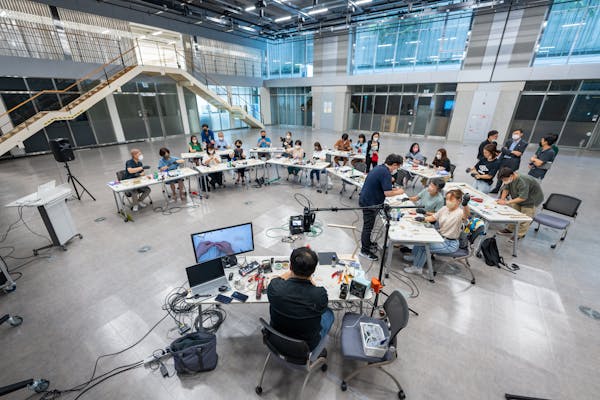
In the wake of the global pandemic that disrupted traditional education systems, universities worldwide are undergoing a transformative shift towards hybrid models, blending online and in-person learning experiences. This revolution marks a pivotal moment in the history of education, as institutions seek to adapt to the evolving needs and preferences of students in a post-pandemic world.
As the COVID-19 pandemic forced educational institutions to close their physical campuses and transition to remote learning almost overnight, universities were confronted with unprecedented challenges. The sudden shift to online instruction exposed existing disparities in access to technology and highlighted the need for more flexible learning options.
However, what initially began as a temporary response to the crisis has now evolved into a permanent restructuring of higher education. Recognizing the potential benefits of online learning, universities are embracing hybrid models that combine the convenience of virtual instruction with the value of face-to-face interaction.
One of the key drivers behind this online learning revolution is the recognition that traditional educational approaches may no longer suffice in meeting the diverse needs of today's students. With the proliferation of digital technologies and the rise of remote work and learning, there is a growing demand for flexible, accessible, and personalized educational experiences.
Dr. Emily Chen, a professor of educational technology at a leading research university, believes that hybrid learning represents the future of education. "The pandemic accelerated the adoption of online learning technologies, but it also revealed the limitations of traditional classroom-based instruction," she explains. "By integrating online and in-person components, we can create a more inclusive and engaging learning environment that caters to the needs of all students."
Indeed, hybrid models offer several advantages over traditional classroom-based instruction. For one, they provide greater flexibility, allowing students to access course materials and participate in discussions at their own pace and convenience. This flexibility is particularly beneficial for non-traditional students, such as working adults and parents, who may have other commitments that make attending classes in person challenging.
Moreover, hybrid learning enables universities to reach a broader audience beyond their local communities. With online components, institutions can attract students from different geographical locations, cultural backgrounds, and socioeconomic statuses, thereby promoting diversity and inclusion in higher education.
However, implementing hybrid models requires careful planning and investment in educational technology infrastructure. Universities must ensure that their online platforms are user-friendly, accessible, and equipped with the necessary tools and resources to support effective teaching and learning.
To facilitate this transition, many universities are investing in professional development programs to train faculty members in the use of digital teaching tools and pedagogical strategies for online instruction. Additionally, institutions are collaborating with technology companies to develop innovative solutions tailored to the needs of higher education.
One such collaboration is between a prestigious Ivy League university and a leading ed-tech startup to create a cutting-edge virtual learning environment. The platform combines immersive simulations, interactive lectures, and real-time collaboration tools to replicate the benefits of in-person instruction in a digital format.
According to Dr. Michael Wong, the founder and CEO of the ed-tech startup, the goal is to provide students with an enriching educational experience that goes beyond traditional classroom boundaries. "Our platform leverages the latest advancements in virtual reality and artificial intelligence to create immersive learning environments that engage students and foster critical thinking skills," he explains.
Indeed, the integration of emerging technologies such as virtual reality (VR) and augmented reality (AR) holds immense potential for transforming the way education is delivered and experienced. By leveraging these technologies, universities can create interactive simulations, virtual laboratories, and immersive field trips that enhance student learning and engagement.
For example, a biology professor at a state university is using VR technology to take her students on virtual field trips to explore ecosystems and observe wildlife in their natural habitats. "Virtual reality allows students to experience things firsthand that would otherwise be impossible in a traditional classroom setting," she says. "It's a game-changer for science education."
Furthermore, hybrid models of education are also driving innovation in assessment and evaluation methods. With online learning platforms, instructors can collect real-time data on student performance and engagement, enabling them to provide personalized feedback and support. Additionally, digital assessment tools such as quizzes, simulations, and peer evaluations offer alternative ways to measure student learning outcomes effectively.
Despite the many benefits of hybrid learning, some challenges remain. One concern is the digital divide, which disproportionately affects students from low-income backgrounds or rural areas with limited access to reliable internet connections and technology devices. To address this issue, universities are exploring various strategies, such as providing loaner laptops, subsidizing internet costs, and partnering with community organizations to expand broadband access.
Moreover, there are lingering questions about the quality and rigor of online education compared to traditional classroom-based instruction. Critics argue that online learning may lack the interpersonal interactions and hands-on experiences that are integral to the learning process. However, proponents of hybrid models counter that well-designed online courses can be just as effective as in-person classes, if not more so, in promoting active learning and student engagement.
As universities continue to embrace hybrid models of education, the landscape of higher education is undergoing a profound transformation. By leveraging the power of digital technologies, institutions are reimagining the possibilities of teaching and learning in the 21st century. The online learning revolution is not just a response to the challenges of the pandemic but a catalyst for innovation and progress in education.


0 Comments